




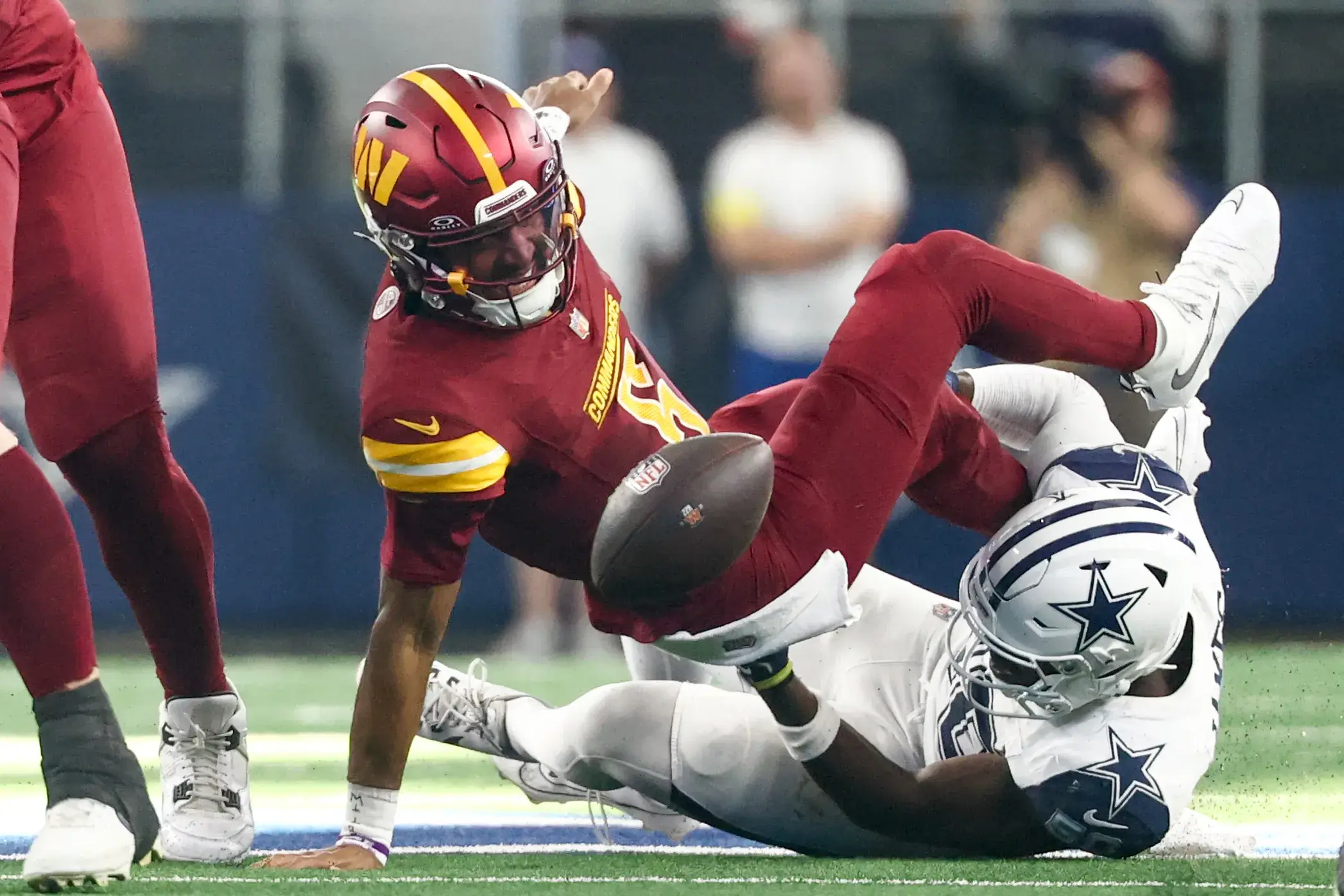
Jayden Daniels, the quarterback for the Washington Commanders, suffered a dislocated left elbow during a Week 2 game against the Dallas Cowboys in September 2026. The injury occurred near the end of the first half when Daniels appeared to lose his balance while moving near the goal line and tried to brace his fall with his left arm. The awkward landing injured his elbow, forcing him out of the game and raising immediate concerns about how long Washington would have to play without its starting quarterback. His teammates and coaching staff were understandably concerned, especially because Daniels had already experienced a similar injury in 2025.
The timing was particularly frustrating for Daniels and the Commanders. The young quarterback had worked hard during the offseason to improve his game and build chemistry with his teammates. His ability to combine accurate passing with explosive running makes him central to Washington’s offensive strategy. Losing him meant the team had to adjust its game plan quickly, relying on backup quarterbacks while medical specialists assessed the injury. Although the initial situation looked worrying, the absence of a reported elbow fracture offered some encouragement as the team planned his recovery.
Jayden Daniels Injury Update and Current Status
The latest confirmed developments show that Daniels returned to action in October after missing two games. On October 9, 2026, the Commanders announced that he had been cleared to start against the New York Giants after completing a full week of practice. He wore a brace on his left arm, and the team expected him to continue using it for the remainder of the season. His return was an encouraging milestone, although being cleared to play did not mean that every concern about the recurring injury had disappeared.
Daniels subsequently played against the Giants on October 11, helping Washington reach a 27–27 tie. However, the Commanders’ wider season continued to be challenging, and the quarterback’s return did not immediately solve the team’s problems. By late October, reporting had highlighted questions about his passing consistency, protection from the offensive line, and the physical demands of playing through an elbow injury. As of October 27, the latest information available indicates that he had returned to competition, but readers should distinguish that confirmed return from any unverified claim that he is completely recovered or free from risk.
How Serious Is His Elbow Injury?
A dislocated elbow is a significant injury because the elbow joint plays an important role in stabilizing the arm and supporting everyday movements. It occurs when the bones forming the joint are forced out of their normal alignment. Depending on the injury, surrounding ligaments, muscles, nerves, and blood vessels may also be affected. Treatment and recovery depend on the extent of the damage, the joint’s stability, and the patient’s response to rehabilitation.
For an NFL quarterback, the demands are even greater. Daniels needs to maintain balance, absorb contact, protect himself during scrambles, and execute accurate throws while under pressure. Although the injury affected his left arm rather than his throwing arm, that distinction does not make it insignificant. His medical team must consider how well the joint tolerates movement and contact, particularly during plays in which he runs with the football or falls to the ground.
Why the Non-Throwing Arm Still Matters
Daniels is right-handed, so the injured left elbow is not his primary throwing elbow. That may help explain how he was able to return without completely changing his passing mechanics. Nevertheless, the non-throwing arm remains important for balance, ball security, and absorbing impact. Quarterbacks frequently use both arms when protecting the football, avoiding defenders, and regaining stability after contact.
The recurring nature of the injury is another reason for caution. Daniels previously experienced a similar left-elbow dislocation in 2025, making the September 2026 incident especially concerning. Medical professionals have raised questions about the possibility of further injury, although an individual’s precise risk cannot be determined from public reporting alone. His treatment plan and the team’s medical assessments remain more reliable indicators than speculation about his long-term future.
Jayden Daniels’ Recovery Timeline
Daniels’ recovery progressed through several important stages during September and October 2026. The following timeline summarizes the publicly reported developments.
| Date or period | Reported development |
|---|---|
| September 2026, Week 2 | Dislocated his left elbow against Dallas. |
| Following the injury | Missed the next two games while undergoing evaluation and rehabilitation. |
| Early October | Returned to practice as Washington considered his readiness. |
| October 9 | Cleared to start against the New York Giants. |
| October 11 | Returned to game action in Washington’s 27–27 tie with New York. |
| Late October | Questions about his consistency and long-term elbow health remained part of the wider discussion about Washington’s season. |
This timeline shows that Daniels’ initial absence was relatively short, but the length of a layoff does not tell the whole story. Athletes can return to competition while continuing to use protective equipment and follow individualized rehabilitation plans. The important question is not simply how quickly a player returns; it is whether the joint remains stable and whether the athlete can perform safely and effectively over time.
How the Injury Affects the Commanders
Daniels’ health has a direct influence on Washington’s offensive identity. His ability to extend plays, escape pressure, and create opportunities with his legs forces opposing defenses to account for more than a conventional passing attack. When he is unavailable, the Commanders must rely on alternative quarterbacks and may need to simplify parts of their offensive approach.
His absence earlier in the season placed additional responsibility on backup quarterbacks, including Marcus Mariota, while Washington worked to maintain its competitiveness. Injuries elsewhere on the roster also complicated the situation. By late October, reporting described problems with offensive-line protection and the loss of important receiving options, including Terry McLaurin, who was reported out for the season. Those issues make it harder for any quarterback to find consistent rhythm.
The Commanders therefore need to manage more than one problem. Keeping Daniels healthy is important, but protecting him with better blocking and creating quicker, safer passing options can also reduce the pressure he faces. A quarterback’s recovery cannot solve every weakness on a team, and Washington’s results will depend on how effectively the entire offense performs.
Performance After Returning From Injury
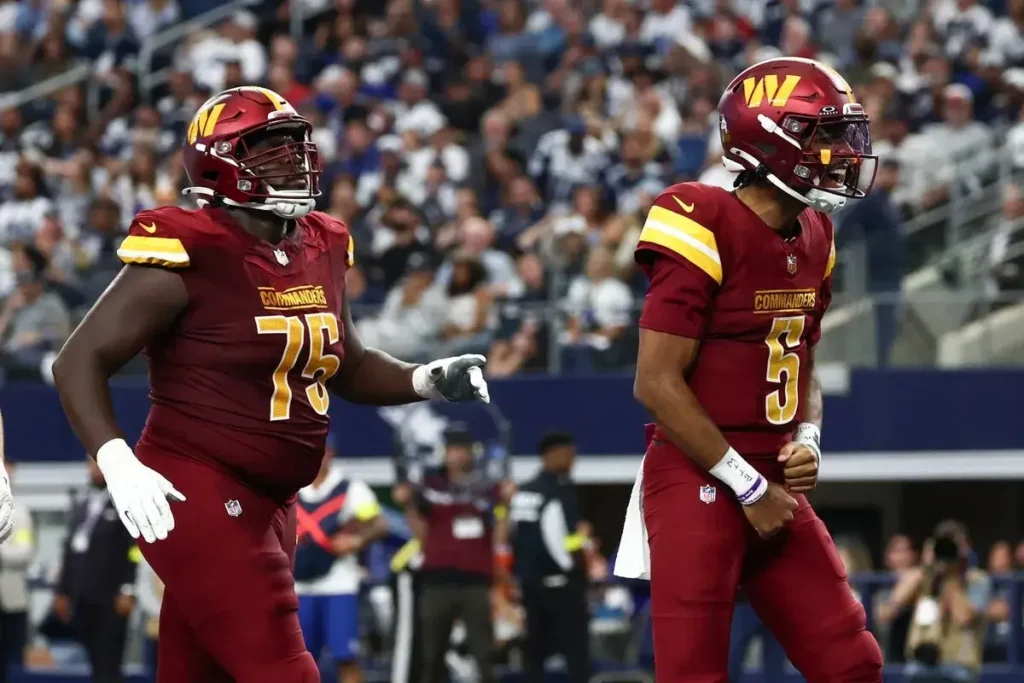
Daniels’ return against the Giants offered reasons for optimism. Washington’s official coverage praised several of his plays, and head coach Dan Quinn highlighted his ability to produce impressive moments. Returning after missing two games and wearing an elbow brace was a meaningful step for the young quarterback. However, the game ended in a tie rather than the victory Washington wanted.
A successful return should be assessed through more than a single result. Passing accuracy, decision-making, mobility, protection of the football, and the ability to withstand contact all matter. Daniels can still make valuable plays while adjusting to the brace and rebuilding his rhythm. At the same time, a few strong moments do not establish that the injury is no longer a concern.
Late-October coverage also identified inconsistency in Washington’s passing game and problems with pressure from opposing defenses. It would be misleading to attribute every disappointing play to the elbow, because offensive protection, receiver availability, coaching decisions, and defensive opposition can all influence performance. The fairest assessment considers both Daniels’ individual decisions and the conditions in which he is playing.
Long-Term Concerns and Injury Prevention
The biggest question surrounding the Jayden Daniels injury is whether his elbow will remain stable throughout the season and beyond. A repeat dislocation deserves careful attention, but it does not automatically mean that a player will suffer another injury or experience permanent limitations. The outlook depends on individual medical findings, rehabilitation progress, joint stability, and the physical demands of competition.
Protective equipment, strength and conditioning, movement training, and improved awareness during contact may all form part of a broader injury-management approach. The appropriate measures, however, must be determined by Daniels’ medical and performance teams. Fans should be cautious about interpreting an elbow brace as proof that he is either fully protected or unable to play effectively.
Washington can also help by improving the circumstances around its quarterback. Better pass protection, well-designed running plays, and opportunities to release the ball quickly can limit unnecessary exposure to defenders. Daniels’ athleticism is a major strength, but using it wisely may be especially important after repeated injuries. Long-term success depends on finding the balance between aggressive playmaking and sensible risk management.
What Happens Next for Jayden Daniels?
As Washington moves beyond its late-October bye week, attention will remain on Daniels’ availability, performance, and ability to manage the demands of the season. His return to the field is already confirmed, but each subsequent practice and game provides additional information about how he is coping. Any new injury designation, change in practice participation, or announcement from the Commanders could affect the assessment of his status.
The team also needs to address its broader performance. A healthier and more consistent offensive line could give Daniels additional time to make decisions, while dependable receiving options could help him avoid holding the ball too long. Those changes would benefit the offense regardless of whether the quarterback is dealing with discomfort or has fully recovered.
For supporters searching for the latest Jayden Daniels injury news, the most reliable information comes from official team announcements, established NFL reporting, and verified injury reports. Rumors about another setback or a definitive recovery timeline should not be treated as fact without confirmation. His health remains a developing story, and the most useful updates will be those that clearly distinguish medical information from performance analysis and speculation.
Conclusion
The Jayden Daniels injury story has been one of the significant challenges facing the Washington Commanders during the 2026 NFL season. After dislocating his left elbow against the Dallas Cowboys, Daniels missed two games before returning against the New York Giants in October. His comeback demonstrated determination, but the recurring nature of the injury means his long-term health deserves continued attention.
Daniels remains an important part of Washington’s plans because of his passing ability, mobility, and potential to change games. However, his success will depend on more than individual talent. Medical management, improved offensive protection, sound decision-making, and consistent support from his teammates will all matter as the season progresses. For now, his return is encouraging, but it should not be confused with proof that every concern has disappeared.
Frequently Asked Questions
1. What injury did Jayden Daniels suffer?
Jayden Daniels suffered a dislocated left elbow during a Week 2 game against the Dallas Cowboys in September 2026. He was forced to leave the game and subsequently missed two contests while recovering.
2. How many games did Jayden Daniels miss because of his injury?
Daniels missed two games following his elbow dislocation. He was cleared to return against the New York Giants on October 11, 2026, after completing a full week of practice.
3. Is Jayden Daniels back playing?
Yes. Daniels returned to action against the Giants in October 2026. However, his return does not necessarily mean that he is completely recovered or that the risk of another injury has disappeared.
4. Did Jayden Daniels injure his throwing arm?
No. The reported injury affected his left elbow, while Daniels is a right-handed quarterback. Even so, his left arm is important for balance, ball security, and protecting himself during contact.
5. Could the Jayden Daniels injury affect his future career?
A recurring elbow dislocation raises legitimate questions about long-term joint stability, but it does not automatically mean his career will be shortened. His outlook will depend on medical assessments, rehabilitation, injury management, and how well he tolerates the physical demands of professional football.