



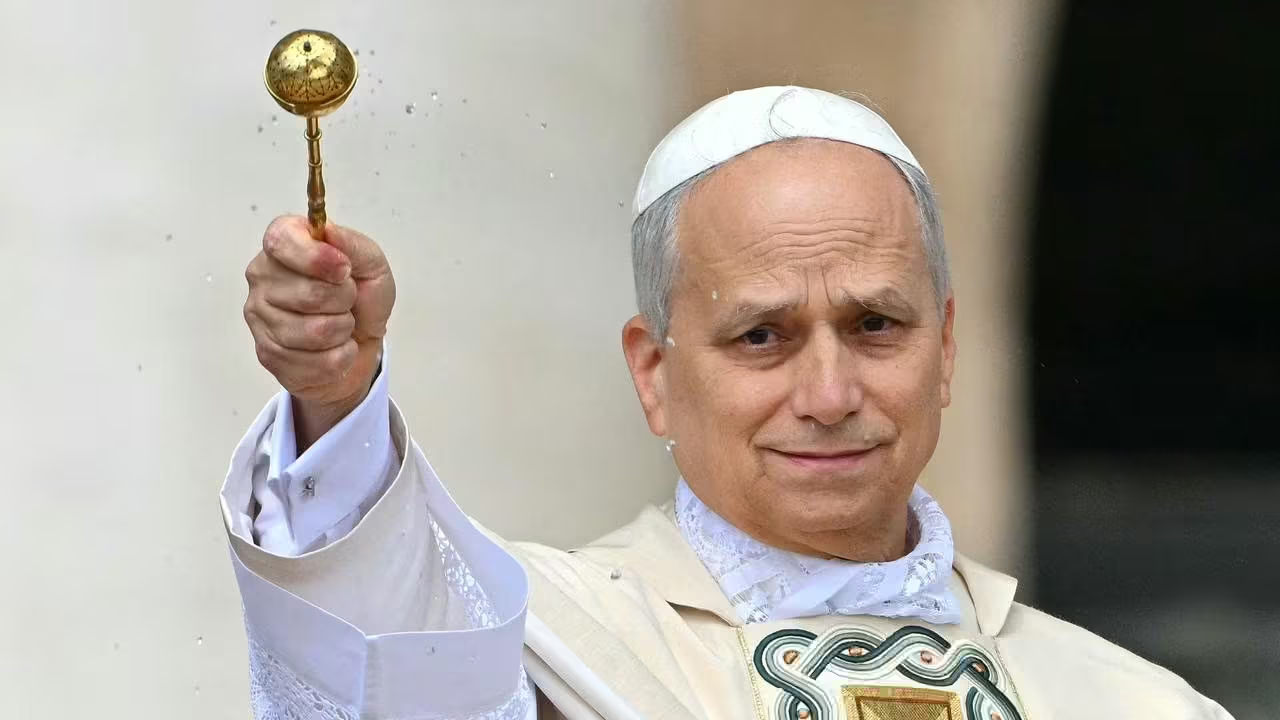
The term pope refers to the Bishop of Rome and the supreme spiritual leader of the Roman Catholic Church. The position carries deep historical roots, religious authority, and global influence that extends far beyond the Vatican City. Over centuries, the papacy has shaped theology, politics, education, and international relations.
At the same time, the role of the pope is often debated. Some view it as a symbol of unity, faith, and moral leadership, while others criticize its historical controversies and institutional power. This balance of respect and criticism makes the papacy one of the most studied and discussed religious offices in the world.
The Meaning and Origin of the Pope
The word pope comes from the Latin “papa,” meaning father. It represents the spiritual fatherhood of the leader of the Catholic Church. The pope is also known as the Bishop of Rome, emphasizing his connection to the ancient Christian community in Rome.
Historically, the role of the pope developed gradually after the time of early Christianity. As the church expanded, the Bishop of Rome gained prominence due to his association with Saint Peter, who is believed to be the first leader of the Christian Church. This foundation helped shape the idea of apostolic succession, which remains central to Catholic belief today.
Authority and Responsibilities of the Pope
The pope holds the highest level of authority within the Roman Catholic Church. His responsibilities include guiding spiritual teachings, approving doctrines, and maintaining unity among millions of Catholics worldwide.
He also appoints bishops, oversees Vatican administration, and represents the Holy See in international diplomacy. In addition, the pope delivers public teachings, encyclicals, and addresses that influence moral and social issues globally.
Beyond religious duties, the pope plays a symbolic role as a global peace advocate. He often speaks on topics such as poverty, climate change, war, and human rights, reflecting the Church’s broader social mission.
The Vatican City and the Papal System
The Vatican City is the smallest independent state in the world and serves as the official residence of the pope. It functions as the administrative and spiritual center of the Roman Catholic Church.
Inside the Vatican, various departments assist the pope in managing church affairs, including the Roman Curia. These institutions help coordinate global Catholic activities, education systems, and charitable organizations.
The Vatican also holds significant cultural and historical treasures, including religious art, manuscripts, and architecture that reflect centuries of Christian heritage.
Selection of a New Pope
When a pope dies or resigns, a process called a papal conclave is held to select a new leader. Cardinals from around the world gather in the Vatican and vote in secrecy until a candidate receives the required majority.
The process is deeply traditional and symbolic. White smoke rising from the Sistine Chapel indicates that a new pope has been chosen, while black smoke means no decision has been made.
This system ensures continuity in leadership and preserves the spiritual traditions of the Catholic Church.
Historical Evolution of the Papacy
The papacy has evolved significantly over time. In earlier centuries, popes often held both spiritual and political power, influencing kingdoms and empires across Europe.
During the Middle Ages, the pope was one of the most powerful figures in Christendom. However, over time, the political influence of the papacy declined, especially after the rise of nation-states.
In the modern era, the pope’s role has become more focused on spiritual leadership, moral guidance, and humanitarian efforts rather than direct political control.
Positive and Negative Aspects of the Papacy
The papacy is widely respected for promoting peace, unity, and humanitarian values across the world. Many people view the pope as a moral voice who speaks for the poor, marginalized, and vulnerable populations.
However, the institution has also faced criticism. Historical controversies, internal reforms, and debates over modernization have sometimes challenged its global reputation. These contrasting views highlight both the strengths and complexities of the papal office.
Modern Role of the Pope in Global Affairs
Today, the pope is not only a religious figure but also an international moral leader. He frequently engages with world leaders, participates in global discussions, and promotes humanitarian initiatives.
The pope often addresses issues such as migration, climate change, economic inequality, and global conflict. His speeches are widely followed by both religious and non-religious audiences.
This global presence shows how the papacy has adapted to modern challenges while maintaining its spiritual foundation.
The Pope and the Catholic Church Structure
The pope stands at the top of the Catholic Church hierarchy. Below him are cardinals, archbishops, bishops, priests, and deacons, each playing a specific role in church administration.
This structure helps manage the global Catholic population, ensuring consistent teachings and practices across different countries and cultures.
The pope acts as the central authority that maintains unity within this vast and diverse organization.
Cultural and Spiritual Influence of the Pope
The pope influences not only religious followers but also global culture. His messages are often shared worldwide through media, shaping public opinion on ethical and moral issues.
In many societies, the pope represents tradition, faith, and continuity in a rapidly changing world. His influence extends into education, healthcare, and charity work through Church-supported institutions.
This cultural impact makes the papacy a unique blend of spiritual leadership and global presence.
Conclusion
The pope remains one of the most powerful and respected figures in the world, representing centuries of religious tradition and moral authority. While the role has evolved over time, its core mission of guiding faith and promoting unity remains unchanged.
Whether viewed as a spiritual leader or a global moral voice, the papacy continues to shape both religious life and international dialogue in meaningful ways.
FAQ: Understanding the Pope and the Papacy (Detailed Guide)
1. What is the main role of the pope?
The pope serves as the spiritual leader of the Roman Catholic Church. His primary role is to guide religious teachings, maintain church unity, and provide moral direction to Catholics worldwide. He also represents the Church in global matters.
Beyond spiritual leadership, the pope is involved in appointing bishops, overseeing Vatican administration, and addressing international humanitarian concerns. His influence extends across both religious and social spheres.
2. How is a new pope selected?
A new pope is chosen through a process called the papal conclave. Cardinals gather in Vatican City and vote in secrecy until one candidate receives a majority.
This process ensures fairness and continuity. The announcement is made when white smoke appears from the Sistine Chapel, signaling the election of a new pope.
3. Where does the pope live?
The pope resides in Vatican City, an independent city-state within Rome, Italy. It serves as the headquarters of the Roman Catholic Church.
The Apostolic Palace is the official residence, although the pope may also use other Vatican facilities for meetings and public appearances.
4. Why is the pope considered important?
The pope is important because he represents the unity of the Catholic Church and serves as a global moral leader. His teachings influence millions of believers around the world.
He also plays a role in international discussions on peace, poverty, and human rights, making him a significant figure beyond religion.
5. Can the pope resign?
Yes, a pope can resign, although it is rare. When a pope resigns, a conclave is held to elect a successor.
Resignations usually occur due to health or personal reasons. The most recent example shows that it is possible, though uncommon in modern history.
6. What is the difference between the pope and a bishop?
A bishop oversees a local diocese, while the pope is the Bishop of Rome and the leader of all bishops in the Catholic Church.
The pope holds supreme authority, while bishops manage regional church communities under his guidance.
7. Does the pope have political power?
The pope does not govern countries, but he holds diplomatic influence as the head of Vatican City. He interacts with world leaders and participates in global discussions.
His power is mainly moral and spiritual rather than political, although it can still influence international affairs.
8. Why is the pope called the “Holy Father”?
The title “Holy Father” reflects the pope’s role as a spiritual father to Catholics worldwide. It symbolizes guidance, care, and religious leadership.
It emphasizes respect and the pope’s responsibility to lead believers in faith and moral teachings.
9. What makes the papacy unique?
The papacy is unique because it combines religious authority, historical tradition, and global influence in one office.
It is one of the oldest continuous institutions in the world, shaping Christianity and global culture for centuries.
10. What challenges does the pope face today?
Modern popes face challenges such as declining religious participation in some regions, global social issues, and internal church reforms.
They must balance tradition with modern expectations while maintaining unity within a diverse global church.
Read more: Magazinegallery.co.uk